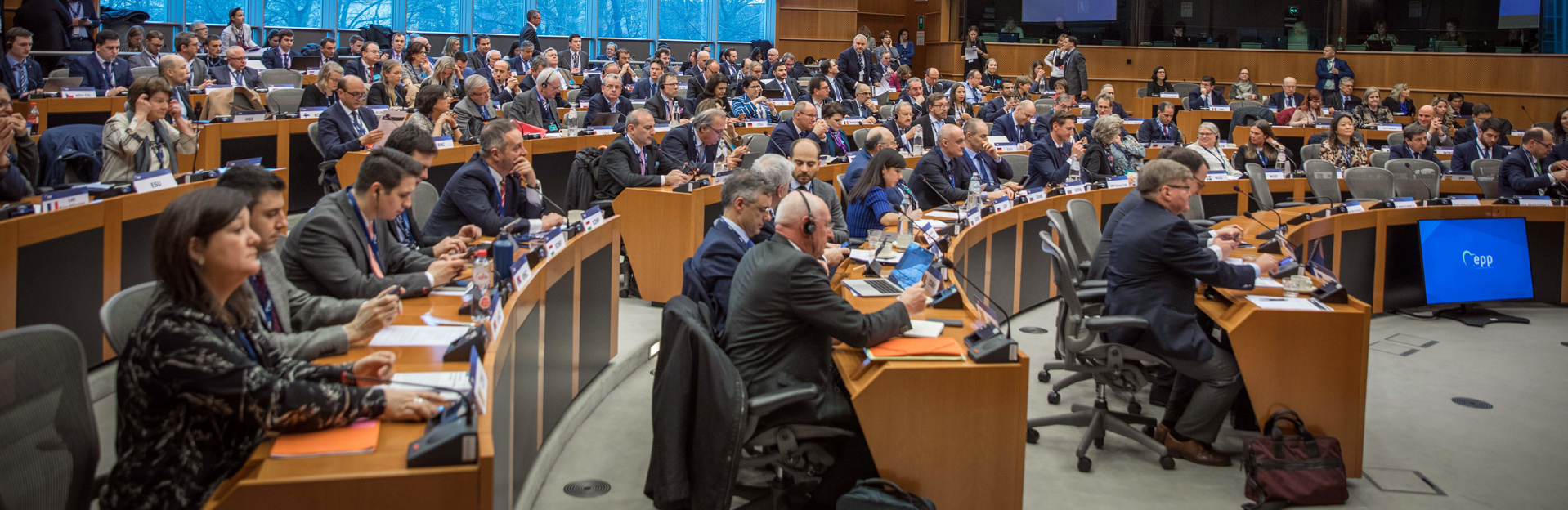

EPP Agriculture Ministers Meeting
30. March 2026




Read more

Manifesto 2024
The EPP Manifesto outlines the basic principles of the Party summary.
The EPP Manifesto outlines the basic principles of the Party summarising who we are, what our values are, what challenges are we facing and what vision we have for the future. The Manifesto was developed in parallel to the EPP Platform document within the EPP Working Group 1 for “European Policy”.
Download:

Platform
The EPP Platform is the core programme of our party outlining our main values, explaining the challenges our society is facing and presenting our vision for the future of European Union.
The EPP Platform is the core programme of our party outlining our main values, explaining the challenges our society is facing and presenting our vision for the future of European Union.
The Party Platform was developed in EPP Working Group 1 for “European Policy” chaired by EPP President Wilfried MARTENS ?and EPP Vice President Peter HINTZE. The Working Group consists of delegates of EPP member parties who prepared and worked?on this document for more than two years and received input?from the drafting committee as well as senior and young experts. The document was adopted at the 2012 EPP Congress in Bucharest, thus replacing the Basic Programme of Athens from 1992.